
An 'ology
(I am showing my age by referring to an 'ology. Points if you know where that is from.)

Saturday started early. I needed to get to Borough Market for 10.30, and it’s a two hour journey. I needed to shower, sort out my unruly hair and navigate local traffic but 0545 wake up was easy because I was excited to go and learn about olive oil at Oliveology.
Of course I got there early, but to me that is far more preferable than being late.
It also meant I had time for a little read of my book, plus a coffee and a spinach pastry. I also got to people watch.
Once 10.30 hit, I headed to the Oliveology stand and was given a cup of olive leaf tea. Not only is it a palate cleanser, it’s also delicious. Each taste test was going to be interspersed with sips of olive leaf tea, which is made with the young leaves and the blossom too. That was delicious, floral but not overly so, and light. Lighter in flavour than jasmine tea, and you only need a pinch to make a litre of full flavoured slightly rosé coloured liquid. I think an addition of cinnamon would be a delight.
Off we went into the tasting of six quite different oils.
The numbers on the labels refer to the extraction temperature that has been used to produce each olive oil. Lower temperature results in less yield, but means that the olive oil retains all of its nutrients. Most olive oil in Greece is produced later in the season, in December, when the olives are ripe. Early-harvest olive oils, like the ones Yiorgos and Nikos make are produced from September and only until November, with unripe or semi-ripe olives (commercial olive oils are produced much later in the season and even until January). As a result, our olive oil retains chlorophyll and nutrients from the olives (such as Vitamin E) that disappear as the olives mature. Of course, this means that a larger amount of olives is required per litre of olive oil. The cold-extracted olive oil is then placed in large tanks, where it is naturally filtered for up to 4 months. This is a slow, natural sedimentation process that takes several months, so as to ensure that there is no sediment left in the bottles (which would make the olive oil go rancid much faster) and that all the nutrients are retained. ~ Oliveology
18C press: Early harvest, from very young, small very green fruit. Grassy and peppery, with a kick. This one takes three times as many olives to produce the same amount of oil as the later harvesting because the oil is from the flesh of the fruit, and at that size the flesh to stone ratio is low. Yes it’s expensive, it’s got every right to be. This smelled the way spring grass does when crushed underfoot.
22C press: Later harvest, still grassy in flavour and smelling so green but less peppery. Slightly higher pressing temperature. More mellow but still with a tingle at the back of the throat.
27C press: Then the latest harvest made from ripe olives. Smooth, fruity and with the pepper just a distant memory. This one is cut summer grass, deliciously so.
The flavoured oils were quite lovely.
Lemons, Oranges & Thyme; orange forward, then lemon, finishing with thyme. You can taste every stage of this one. Perfect for fish, or drizzled over crisped halloumi. Hell, even good over chocolate ice cream.
Walnuts, Fennel, Rosemary & Oregano: This one was not my thing at all, as I really don’t like that anise flavour but if you do, grab some. I imagine this would be brilliant with fish or swirled into a dark mélange of leafy greens.
Apples, Walnuts, Cinnamon, Honey & Sage: Oh my goodness. They don’t have this one often, but honestly? It’s worth holding out for. I could smell Christmas cake and taste dark fruits. I would have this simply to dip fruit bread or sweet rusks into, or to brush onto morning toast and then sprinkle a little more cinnamon. I imagine it would also be fabulous to incorporate into desserts. A chocolate olive oil cake made with this would be outstanding.
We tried four olive cures; their olives are not pasteurised, you get all of the olive goodness that’s missing from an awful lot of commercial olives. DO NOT mention ‘pizza’ olives. They are an abomination and you may as well eat a salted rubber washer. Ripened by chemicals.
New to me were unsalted kalamata, and Throuba olives.
Normally eating an olive straight from the tree is an absolute no no. They are so bitter that it’s just not worth it but Throuba olives ripen and cure on the tree. They have a much drier texture, and they are almost chewy. More akin to a prune than an olive! Only grown and produced on Thassos Island in the North of Greece, they hold P.D.O status.
I brought home whole tahini, and also kalamatas with orange. I can’t wait to open that tub!
Oliveology sells online, and they know all their suppliers very well. You can rest assured they know exactly what they are doing.
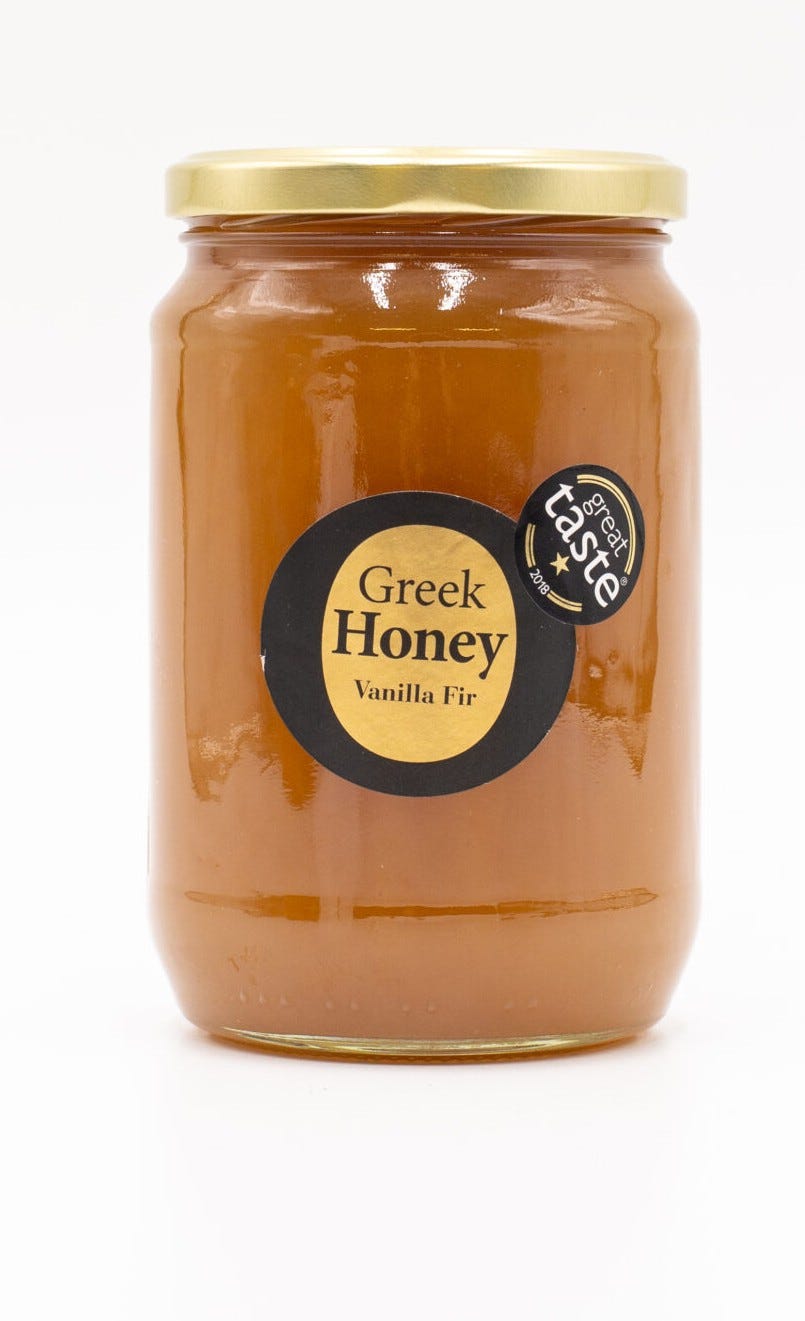
By the way, their Black fir and Vanilla Honey is outstanding this year. The whole jar swirls like golden caramel.
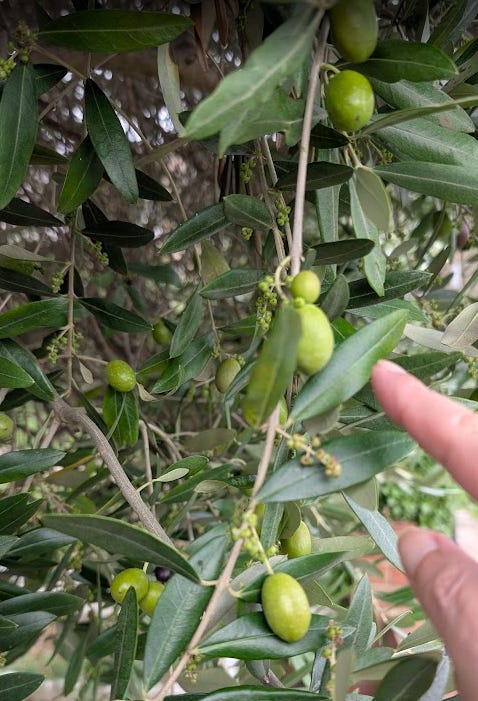
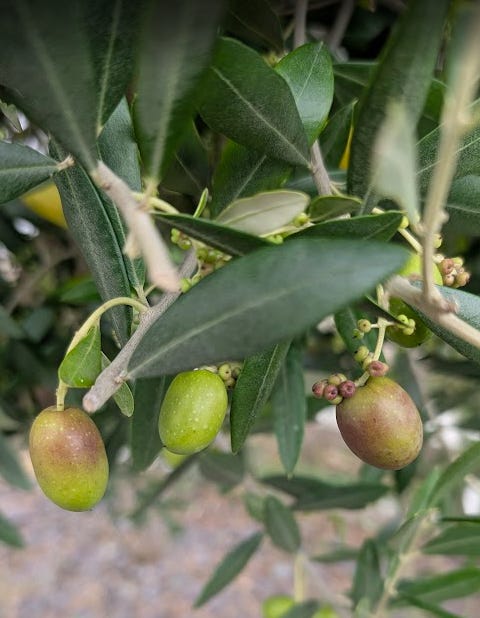
I came home very happy, laden with delicious Swiss and French cheeses, bread and apples but also very tired. I did stop to take a photo of my own olive tree, as she has good sized olives this year.
Borough Market during the day wears me out, there are simply too many people who don’t know how to navigate, and so many of them are gawking and not shopping.
Y’all, buy something. If you want the market to thrive, you need to contribute. That needs to be on every London tourist guide.
I too remember Maureen's 'ology pride!